

EMDR
Reprocess. Strengthen. Shine.®️
What is EMDR?
The name is a mouthful ⎯ and may sound a bit intimidating!
EMDR stands for Eye Movement Desensitization and Reprocessing, and it’s a truly amazing intervention. While EMDR often involves deep emotion, temporary discomfort, and much honesty and trust with tough topics, the extraordinarily positive results are always deemed “well worth the effort.” Many of my clients describe its effects as “magic,” and I agree that its effectiveness feels “magical” to me many, many times each week.
EMDR was developed in 1995 by Francine Shapiro, PhD, and has dramatically and positively impacted the lives of many thousands of people all over the world. In addition to the EMDR Institute in California, Dr. Shapiro created the Humanitarian Assistance Program (HAP) to provide EMDR training for therapists at non-profit organizations for a reduced fee and EMDR interventions at no charge for victims of natural disasters, wars, terrorism, etc. In fact, I received my initial EMDR Training through HAP when I worked at Hospice & Palliative CareCenter.
It’s also important to note that, while the intervention was named after the back-and-forth eye movements initially utilized for the bi-lateral stimulation inherent in EMDR, there are numerous other ways to engage in bi-lateral stimulation, such as special headphones, TheraTapper™, self-tapping, etc.
Each modality we discuss in session has been validated as equally effective as the eye movements originally utilized.
In a nutshell, EMDR is a therapeutic intervention that effectively and efficiently eliminates or very significantly lessens the impacts of negative memory.
While much remains undiscovered about brain function and trauma, we do know that when a person is very upset, frightened, or traumatized, the brain cannot process information like it ordinarily would, and one moment or a series of traumatic incidents may become ‘frozen’ in time. We do know for certain that the brain is not necessarily ‘fixed,’ that neuroplasticity is very integral to ‘re-wiring’ neural pathways.
Traumatic memories often have a lasting and negative impact that interferes with the way a person views the world, functions in their life, and in the ways they relate to others and to stimuli.
Trauma often causes current-day responses to present as disproportionate to the actual threat. EMDR provides an opportunity for the brain to ‘reprocess’ these traumatic memories in order to achieve or regain health and overall well-being. In other words, the response to the threat or to the perceived threat becomes more proportionate or more closely aligned.
Let's Get Started
Donna Hampton
(336) 749-2952
donnahamptoncounseling.com
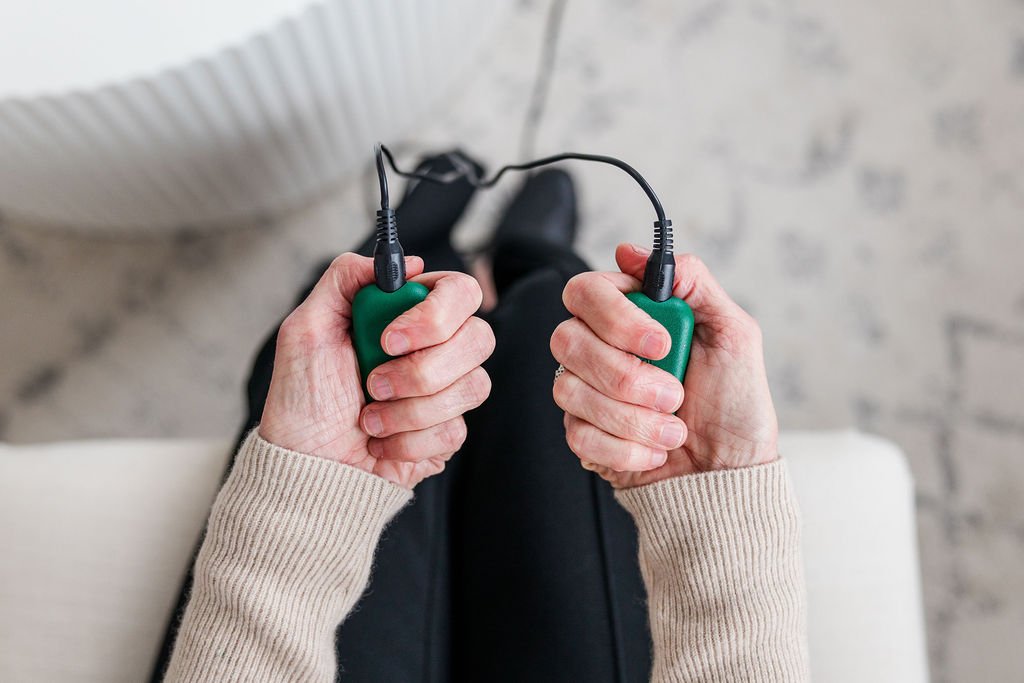
While EMDR was initially used primarily for Posttraumatic Stress Disorder (PTSD), it can be easily incorporated into treatment for nearly any issue that clients bring to counseling, from anxiety to relationship challenges, boundary-setting, and performance-enhancement.
In my clinical work, I utilize EMDR for trauma on a daily basis; I also find it to be incredibly beneficial for helping alleviate negative beliefs about oneself ⎯ and often those negative beliefs have been with us since very early childhood or middle school. For example, many children develop beliefs that they are somehow ‘responsible’ for their parents’ arguments or divorce or that they must be ‘perfect’ in order to be accepted and loved.
Often, our brains even know intellectually these negative beliefs aren’t true...and, yet, we continue to operate out of these limiting, restrictive, maladaptive beliefs. EMDR essentially helps to ‘re-wire’ the neural pathways in the brain and to replace these irrational, negative cognitions with more rational, positive beliefs ⎯ beliefs that are nearly always true and that always serve us better.

EMDR has become such an essential part of my daily practice of counseling that I describe my experiences of it this way:
Reprocess. Strengthen. Shine.®️
Together, we Reprocess the traumas and the negative beliefs.
Then, we Strengthen the positive beliefs ⎯ the beliefs that serve you and the world better.
This allows YOU to Shine.
What People Are Saying
“Being referred to counseling with Donna Hampton not only changed my life, but I feel it also saved my life. My grief was compounded by immense trauma. Donna helped me navigate my journey with the help of EMDR therapy in conjunction with traditional counseling.”
Cecilia
“As a result of Donna’s knowledge of and certification in EMDR, she was able to eradicate severe nightmares which I had developed. Donna has a broad-based knowledge which also allows her to help clients with the many difficulties of life. I unreservedly recommend Donna.”
Mike
"EMDR with Donna has been incredibly transformative for me. Each session is unexpected & unique.
I feel our EMDR sessions are so impactful & healing because it speaks to me in my soul’s language. Every session has been transcendent.
For me, I have found EMDR releases trauma in a non-traumatic way. I leave each session feeling deeply supported from within and soothed to my core level.
EMDR with Donna is magical. Truly.”
Maggie
“EMDR cleared out the noise in my head. It helped create the space for life affirming thoughts to surface. It enabled me to access inner wisdom that had simply been blocked by the anxiety I had been experiencing.”
Mary
“I can't say enough about this process of traditional counseling and EMDR with Donna. I am so grateful to have experienced this. I have to say again that it was life-changing.”
Gina

“To bring about change, you must not be afraid to take the first step. We will fail when we fail to try.”